Most people looking for online skills courses aren't looking for a degree. They want one useful skill, learned properly, in a reasonable amount of time — something they can put to work.
That's what House of Skills is built for.
Learn Practical Skills Online With House of Skills
House of Skills is the practical skills training side of The House of Tutors. It offers 11 online skills courses across four areas: Marketing, E-commerce, Creative & Development, and Freelancing.
Here's the short version of how it works:
11 courses across 4 connected skill groups
1 to 4 months per course, depending on the group
Live, self-paced, or a mix, depending on which group you're in
A certificate on completion — for every course
A free trial with no credit card required, plus some courses that are free in full
The teaching is built around doing, not just watching. You learn the concepts, practise them on real tasks, and finish with work you can actually show someone — a design, a store setup, an ad campaign, a piece of writing.
Explore Our Online Skills Courses
These 11 courses are grouped by how the skills naturally work together in real jobs and real client work. Each is introduced below; the full curriculum for each one lives on its own course page.
Marketing
Your content goes here. Edit or remove this text inline or in the module Content settings. You can also style every aspect of this content in the module Design settings and even apply custom CSS to this text in the module Advanced settings.
Digital Marketing
The widest course in this group, and a sensible entry point if you're not sure where to start. It connects the pieces that the other three courses cover in depth: search, paid ads, content, and email — plus how to read what's working using tools like Google Analytics and Google Ads.
Good fit if you want the full map before choosing a specialization, or if you're running your own business and need to understand marketing as a whole rather than one channel.
Meta Ads
Facebook and Instagram advertising, taught around the platform people actually run campaigns in: Meta Ads Manager. Covers audience targeting, campaign structure, testing different versions of an ad against each other, and how the Meta Pixel tracks what happens after someone clicks.
Paid ads are one of the few marketing skills where results are immediately measurable — you can see what a campaign did. That makes it a strong skill to demonstrate to clients or employers.
SEO
Search engine optimization is how a website earns its place in search results without paying for ads. This course covers the main areas: keyword research, on-page SEO, technical SEO, and how backlinks and search rankings relate to each other — with practical use of Google Search Console.
SEO changes often, which is exactly why learning it from current material matters more here than in most subjects.
Content & Copywriting
Two related skills in one course. Content writing informs — blog posts, guides, and the material that brings people to a site in the first place. Copywriting persuades — the words on a landing page, an ad, or an email that ask someone to act.
You'll work on content strategy, brand voice, and writing for different purposes. It's also one of the most portable skills on this page: nearly every business needs words written, which makes it a common entry point into freelancing.
E-commerce
Three courses for selling online — whether that means building your own store or selling through a marketplace that already exists.
Shopify
Building and running an online store on Shopify: store setup and structure, product listings, payment gateway configuration, and inventory management. Also covers dropshipping, where products ship directly from a supplier so you never hold stock yourself.
Practical either way — for your own store, or as a service you offer to clients who need one built.
E-commerce
Broader than any single platform. This course covers how online selling works underneath the software: product research, pricing, listings, order handling, inventory, and the operational side that stays the same no matter which platform you're on.
Useful context if you're deciding between Shopify and a marketplace like Amazon, or if you want to understand the business rather than just the tool.
Amazon (FBA, Virtual Assistant & Wholesale)
One course covering three genuinely different routes into Amazon selling:
- FBA (Fulfillment by Amazon) — you sell, Amazon stores and ships. Usually paired with private label, meaning you sell a product under your own brand.
- Virtual Assistant (VA) — you manage Amazon stores for other sellers rather than running your own, which means no inventory cost to start.
- Wholesale — buying established products in bulk from suppliers and reselling them.
All three run through Amazon Seller Central, and the course covers product sourcing, listing optimization, and how fulfillment actually works.
Creative & Development
Three courses for people who want to build and make things — visuals, video, or websites. These are taught live.
Graphic Design
Design fundamentals taught through Canva: typography, colour theory, layout, and branding. The tool is beginner-friendly by design, which means less time fighting software and more time on the thinking behind good design — which is the part that transfers anywhere.
Design work is also naturally portfolio-friendly. What you make during the course is something you can show.
Video Editing & Short-Form Content
Editing built specifically for short-form video — Reels, Shorts, and similar formats — using CapCut. Covers cuts, transitions, pacing, and the storytelling that keeps someone watching past the first few seconds.
Short-form content is where a lot of current demand sits, for businesses and creators alike. Worth knowing: CapCut is built for this format specifically, not for long-form professional film work — it's the right tool for social content, which is what this course is about.
Web Development/WordPress
Building real, working websites with WordPress, including responsive design so a site works properly on a phone as well as a desktop.
WordPress runs a very large share of the web, so it's a practical, widely applicable skill — and a common freelance service, since businesses regularly need sites built and maintained.
Freelancing
Freelancing: Turn Your Skills Into Client Work
This one works differently from the other ten. It doesn't teach a technical skill — it teaches you how to get paid for one you already have.
Covers building a portfolio, setting up a freelance profile on platforms like Upwork and Fiverr, writing proposals that get replies, communicating with clients, and pricing and positioning what you offer.
Plenty of people learn a skill well and still struggle to find their first client. That's the gap this course exists to close. It's the shortest course here — about a month — and it's designed to pair with another House of Skills course rather than replace one.
Which Online Skills Course Is Right for You?
Your content goes here. Edit or remove this text inline or in the module Content settings. You can also style every aspect of this content in the module Design settings and even apply custom CSS to this text in the module Advanced settings.
Your Goal
Start freelancing as fast as possible
Sell physical products online
Build and manage an online store
Enjoy writing and persuasive language
Enjoy visuals, design, and storytelling
Enjoy strategy and structured thinking
Comfortable with tech, like building things
Want to run paid ad campaigns for clients
A Good Starting Point
Any one skill from Marketing or Creative & Development, then Freelancing
Shopify or Amazon (FBA, VA, Wholesale)
Shopify or E-commerce
Content & Copywriting
Graphic Design or Video Editing & Short-Form Content
SEO or Digital Marketing
Web Development/WordPress
Meta Ads
Still unsure? That's a normal place to be, and it's exactly what the free trial is for — sit in on a course before deciding.
Build a Learning Path Around Your Goals
Most course lists treat every course as a separate product. In practice, these skills stack. Here's how they fit together.
Marketing Learning Path
Start with Digital Marketing for the overview, then specialize: SEO if you want long-term search traffic, Meta Ads if you prefer fast, measurable paid results. Content & Copywriting strengthens both — SEO needs well-written pages to rank, and ads need copy people respond to.
No fixed order is required. Many learners start with whichever course solves a problem they already have.
E-commerce Learning Path
E-commerce gives you the general foundation of selling online. From there it splits by direction: Shopify if you want to build and own your store, Amazon if you'd rather sell through an existing marketplace with built-in traffic.
Worth noting: pairing E-commerce with a Marketing course is a natural combination, since a store still needs people to find it.
Creative & Development Learning Path
Graphic Design and Video Editing & Short-Form Content pair naturally — together they cover both visuals and video, which is most of what content creation demands today. Web Development/WordPress stands more on its own, focused on building the site rather than the content that fills it.
A common combination is one creative skill plus WordPress: you can build a site and make the content that goes on it.
Skill-to-Freelancing Path
This is the path most people are actually on, whether they say it or not.
Learn a skill first — Graphic Design, SEO, Video Editing, whichever fits — then take Freelancing to learn how to turn it into paid work. The technical skill makes you capable. The freelancing course is what helps you find clients, price the work, and present yourself.
Who Are House of Skills Courses For (and Who They're Not)?
Students and Beginners
No prior background is assumed in any course. If you're studying and want a skill you can use before you graduate — or start earning with alongside your studies — that's a common starting point here.
Working Professionals
If you're already working and want to formalize a skill you've been doing informally — running your company's social ads without ever being trained, say — these courses fill that gap. Self-paced options in E-commerce and Freelancing make this workable around a full-time job.
Freelancers and Entrepreneurs
Already freelancing or running something small? These courses sharpen a skill you use loosely, or add a service you can charge for. Business owners often take Marketing or E-commerce courses to handle their own work rather than outsourcing it.
Career Changers
If you're considering a different direction, a 1–4 month course is a serious test of a skill without committing years to a degree. You'll know fairly quickly whether the work suits you.
Who this isn't built for
House of Skills is aimed at teens and adults learning career-focused skills. It's not designed for young children — the subject matter, pace, and tools assume an older learner. For younger students, other Houses at The House of Tutors are a better fit.
It's also not a shortcut. These courses give you structure, teaching, and practice — but the skill still takes real work from you.
How Our Online Skills Courses Work
Live, Self-Paced, and Mixed Format Classes
Format depends on the group, and each choice suits the subject:
- Marketing — a mix of live sessions and self-paced material
- E-commerce — fully self-paced
- Creative & Development — taught live, which suits skills where watching someone work and getting feedback matters
- Freelancing — self-paced
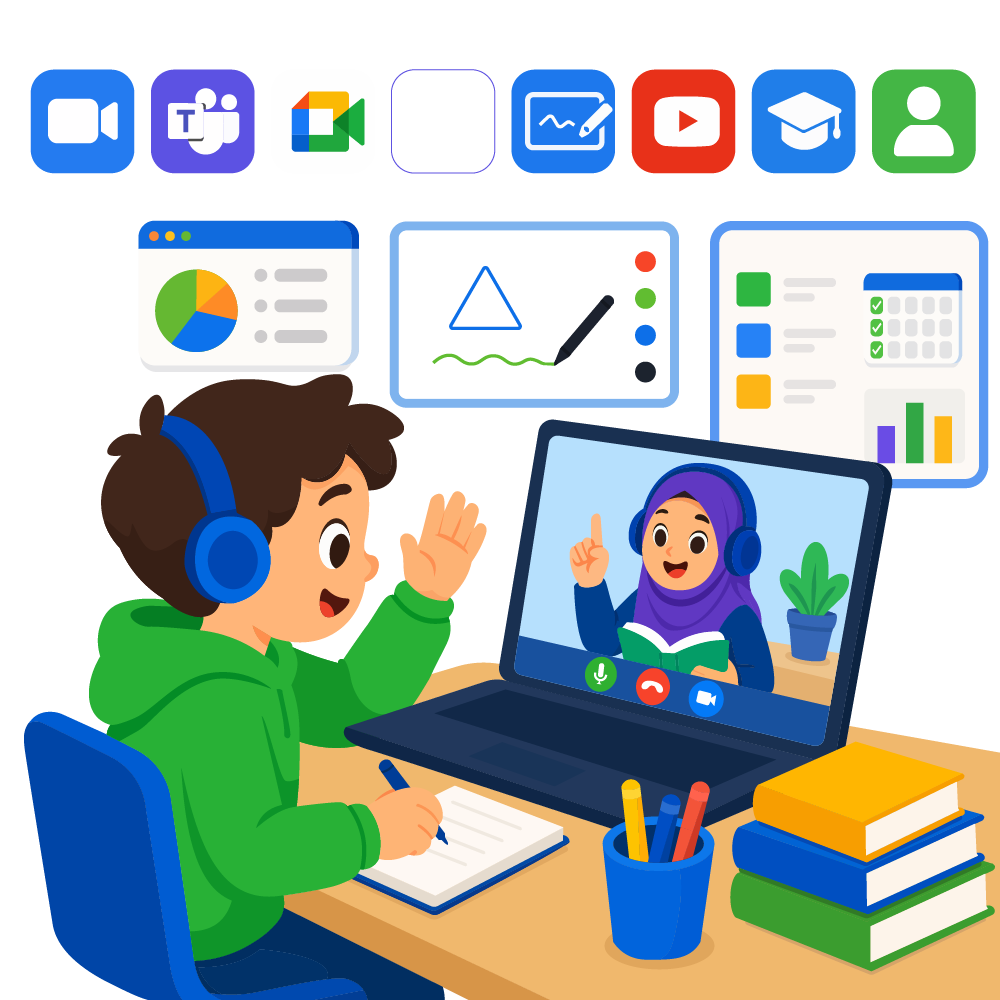
Live sessions run on tools you likely already use — Microsoft Teams, Zoom, or Google Meet — with an interactive whiteboard for teaching. Course materials, assignments, and progress are organized through an LMS and student portal.
|
Skill Group |
Format |
Duration |
Number of Courses |
|
Marketing |
Mix of live & self-paced |
1–4 months |
4 |
|
E-commerce |
Self-paced |
3 months |
3 |
|
Creative & Development |
Live |
3 months |
3 |
|
Freelancing |
Self-paced |
1 month |
1 |
All House of Skills courses include a certificate on completion.
One honest caveat: finishing a course in the stated time doesn't automatically mean mastery. A course gives you structure, correct fundamentals, and guided practice. How far the skill actually develops depends on how much you use it afterward. Anyone promising expertise in a fixed number of weeks is overselling it.
How Long Online Skills Courses Take
Free Trial vs. Free Online Courses
These are two different things, and the difference matters:
- A free trial lets you sit in on part of a paid course before deciding whether to continue. No credit card required.
- A free course is a complete course you can take without paying at all.
Both exist here. If you're testing whether a specific paid course suits you, take the trial. If you want to explore a subject at no cost, start with a free course.
Why Choose a Structured Online Course Over Free Resources
There's a lot of free material for every skill on this page — free government training programs, YouTube tutorials, blog posts, documentation. None of it is worthless, and if you only want to find out whether a subject interests you, free resources are a perfectly sensible starting point.
The difference shows up in two places: sequence and feedback.
Free content is made piece by piece, by different people, at different times, for different skill levels. You end up assembling a curriculum without yet knowing enough to judge what's missing or outdated. And when you get stuck — or worse, when you're doing something wrong without realizing it — there's usually nobody to ask.
Real Instructor Support, Not Just Videos
These courses are taught by qualified teachers. For House of Skills specifically, that means working professionals and practitioners — people who use these skills in real client work, not people who studied them once.
That matters most at exactly the moment a tutorial can't help you: when your specific campaign, store, or site isn't behaving the way the tutorial said it would.
Courses Kept Current With How These Skills Actually Work Today
SEO, Meta Ads, and e-commerce change constantly. A tutorial from three years ago can teach a method that no longer works — and nothing in the video tells you it's outdated. This is a genuine risk with free content, where old material stays online and often still ranks well.
Course material here is built around how these skills work now.
Free or Paid Online Courses: Which Should You Choose?
Real Instructor Support, Not Just Videos
These courses are taught by qualified teachers. For House of Skills specifically, that means working professionals and practitioners — people who use these skills in real client work, not people who studied them once.
That matters most at exactly the moment a tutorial can't help you: when your specific campaign, store, or site isn't behaving the way the tutorial said it would.
Courses Kept Current With How These Skills Actually Work Today
SEO, Meta Ads, and e-commerce change constantly. A tutorial from three years ago can teach a method that no longer works — and nothing in the video tells you it's outdated. This is a genuine risk with free content, where old material stays online and often still ranks well.
Course material here is built around how these skills work now.
Learn Through Practical, Project-Based Courses
"Practical" appears in almost every course advertisement, so here's specifically what it means here.
Learn the Concepts
Each course starts with real foundations — the terminology, the tools, and the reasoning behind them. Not just which button to press, but why, so you can adapt when the tool changes.
Practice the Skills
You then apply it through exercises and tasks built into the course. This is the step most free learning skips, and it's the step where a skill actually forms.
Build Work You Can Use
Where the course allows, you finish with something real: a design, an edited video, a working site, a campaign plan, a written piece. For anyone heading toward freelancing, this matters more than the certificate — clients ask what you've made, not what you attended.
Apply Your Skills Beyond the Course
What happens next is yours to choose: use it in your current role, apply it to your own business or website, or offer it as a service.
What Happens After You Complete a Course?
Apply the Skill to Your Own Work
The most immediate use is your own — your site, your store, your content, your job. Many learners take a course to solve a specific problem they already have.
Build a Portfolio
For Graphic Design, Video Editing, Web Development, and Copywriting especially, the work you produce during the course can become the beginning of a portfolio. A certificate tells someone you completed a course; a portfolio shows them what you can do.
Explore Freelance Services
If you want to turn the skill into paid client work, that's what the Freelancing course is for — setting up on Upwork or Fiverr, writing proposals, and landing a first client.
Continue Developing Your Skills
One course is rarely the finish line. Many learners follow one course with another from the same group — adding SEO after Digital Marketing, or WordPress after Graphic Design — building a set of skills that work together.
Frequently Asked Questions
What are online skills courses?
Online skills courses teach a specific practical skill — such as SEO, graphic design, or freelancing — through structured online lessons rather than in a physical classroom. They're usually shorter and more focused than a degree, aimed at one usable skill rather than broad academic study. At House of Skills, courses run 1 to 4 months and include a certificate.
Which skills can I learn online?
At House of Skills you can learn 11 skills across four groups: Marketing (Digital Marketing, Meta Ads, SEO, Content & Copywriting), E-commerce (Shopify, E-commerce, Amazon FBA/VA/Wholesale), Creative & Development (Graphic Design, Video Editing & Short-Form Content, Web Development/WordPress), and Freelancing.
How long do online skills courses take?
Between 1 and 4 months here, depending on the group. Marketing courses run 1–4 months, E-commerce and Creative & Development run about 3 months, and Freelancing runs about 1 month. Building genuine depth in any skill continues with practice after the course ends.
Do I need a degree to learn these skills?
No. None of these courses require a degree or prior formal background. They're built for beginners, and in these fields employers and clients generally care more about what you can demonstrate than what you studied.
Are there free online skills courses?
Yes. Some House of Skills courses are free to take in full. Separately, paid courses offer a free trial so you can try before paying — no credit card required.
Should I choose a free or paid course?
If you're still deciding whether a skill suits you, start free. If you already know your direction and want enough depth to use the skill professionally, a paid course gives you structure, teaching support, practical work, and a certificate.
Can beginners take these courses?
Yes. Every course assumes no prior experience in the subject. Tools like Canva and CapCut are chosen partly because they're approachable for beginners.
What skills should I learn to start freelancing?
Any of the other ten can work. Graphic Design, Content & Copywriting, Video Editing, and Web Development are common starting points because the work is easy to show in a portfolio. Once you have a skill, the Freelancing course covers finding clients, writing proposals, and pricing your work.
Can I learn SEO online?
Yes. SEO is one of the four Marketing courses, covering keyword research, on-page SEO, technical SEO, backlinks, and search rankings, with practical use of Google Search Console. SEO is well suited to online learning since the work itself is done online.
Can I learn video editing online?
Yes. The Video Editing & Short-Form Content course teaches editing with CapCut, focused on short-form formats like Reels and Shorts — covering cuts, transitions, pacing, and short-form storytelling.
Start Learning With
House of Skills
Three ways to begin, depending on where you are:
Explore the Courses
Not sure yet? Browse all 11 courses across the four skill groups and see what matches your goals.
Try a Free Course or Free Trial
Test before committing. Start a free course, or take a free trial on a paid one — no credit card required.
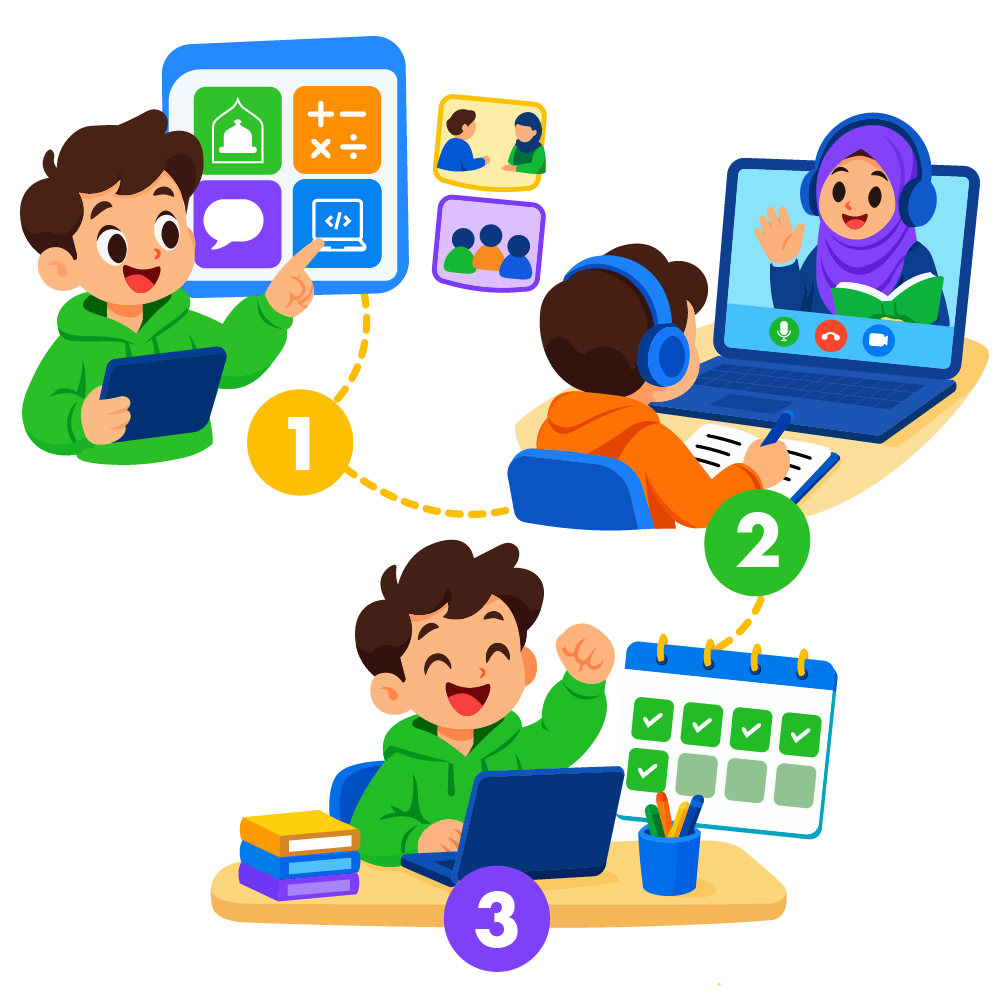
Choose a Paid Course
Ready to build real depth? Enroll in a structured course with qualified teacher support, practical project work, and a certificate on completion.